
山東途暢路橋工程有限公司
聯(lián)系人:石總
電話:18264104888
地址:山東省濟(jì)南市槐蔭區(qū)經(jīng)一路273號(hào)群盛華城
冷再生機(jī)租賃:瀝青路面就地冷再生施工技術(shù)分析
引言隨著我國社會(huì)經(jīng)濟(jì)的持續(xù)發(fā)展,社會(huì)對(duì)于公路交通系統(tǒng)的需求也在持續(xù)增長,其一方面推動(dòng)了公路交通網(wǎng)絡(luò)建設(shè)的持續(xù)推進(jìn),另一方面也使得公路質(zhì)量及要求不斷提升。瀝青路面作為我國公路常用路面,一般設(shè)計(jì)使用壽命為 15~20 年,我國很多區(qū)域公路在長久使用后均已經(jīng)進(jìn)入到大中修期,如何、、低成本地完成公路修復(fù)已經(jīng)成為當(dāng)前關(guān)注的問題。據(jù)此,本文以某農(nóng)村公路為研究對(duì)象,對(duì)瀝青路面就地冷再生技術(shù)的有效應(yīng)用進(jìn)行綜合分析,旨在為后續(xù)其他農(nóng)村公路的修復(fù)及改造提供相應(yīng)的技術(shù)參考。1 工程概況某三級(jí)公路 2017 年竣工,經(jīng)過多年運(yùn)營后,公路路面已經(jīng)出現(xiàn)較為明顯橫裂、縱裂、沉陷、坑槽、涌包等病害問題,相關(guān)病害不僅影響公路的正常通行,還會(huì)導(dǎo)致路面出現(xiàn)滲水、積水等問題,誘發(fā)其他公路病害,嚴(yán)重影響公路的使用壽命。通過對(duì)舊路的鉆芯取樣,確認(rèn)路基破損較為嚴(yán)重,而傳統(tǒng)公路修補(bǔ)工藝難以滿足公路修復(fù)要求,綜合分析后終采用瀝青路面就地冷再生技術(shù)。在具體施工前,需先獲取舊路的冷再生混合料級(jí)配。此過程中分別采用 150r/min和 100r/min兩種刀頭轉(zhuǎn)速進(jìn)行舊路現(xiàn)場(chǎng)取樣,再依次選用 26.5~0.075mm套篩進(jìn)行樣本篩分,進(jìn)而獲取到舊路粗細(xì)集料含量,繪制出舊路篩分曲線如圖 1 所示。
Introduction: With the continuous development of China's social economy, the demand for highway transportation system in society is also growing. On the one hand, it promotes the continuous promotion of highway transportation network construction, and on the other hand, it also leads to the continuous improvement of highway quality and requirements. Asphalt pavement, as a commonly used road surface in China, is generally designed to have a service life of 15-20 years. Many regional highways in China have entered the period of major and medium repairs after long-term use. How to efficiently, high-quality, and low-cost complete highway repairs has become a key issue of concern at present. Based on this, this article takes a rural road as the research object and comprehensively analyzes the effective application of in-situ cold recycling technology for asphalt pavement, aiming to provide corresponding technical references for the repair and renovation of other rural roads in the future. 1 Project overview A third-class highway was completed in 2017. After many years of operation, the road surface has appeared obvious transverse cracks, longitudinal cracks, subsidence, pits, bumps and other diseases. The related diseases not only affect the normal traffic of the road, but also lead to water seepage, ponding and other problems on the road surface, induce other road diseases, and seriously affect the service life of the road. Through core sampling of the old road, it was confirmed that the roadbed was severely damaged, and traditional highway repair techniques were unable to meet the requirements of highway repair. After comprehensive analysis, the asphalt pavement on-site cold recycling technology was ultimately adopted. Before specific construction, it is necessary to obtain the grading of the cold recycled mixture for the old road. During this process, two different blade speeds of 150r/min and 100r/min were used for on-site sampling of the old road. Then, 26.5-0.075mm sieve sets were selected for sample screening in sequence to obtain the coarse and fine aggregate content of the old road. The old road screening curve was plotted as shown in Figure 1.
如圖 1 所示,當(dāng)?shù)额^轉(zhuǎn)速為 150r/min時(shí),舊路集料 5mm以下篩分通過率較小,接近標(biāo)準(zhǔn)規(guī)范下限,確認(rèn)集料較粗。舊路集料 19mm篩分通過率超過標(biāo)準(zhǔn)規(guī)范上限,確認(rèn)篩孔偏細(xì);當(dāng)?shù)额^轉(zhuǎn)速為 100r/min時(shí),舊路集料 10mm以下篩分通過率超過標(biāo)準(zhǔn)規(guī)范下限,確認(rèn)集料較粗。綜合分析后確認(rèn)兩種集料均未完全滿足標(biāo)準(zhǔn)級(jí)配范圍區(qū)間,所以在具體瀝青路面就地冷再生技術(shù)應(yīng)用時(shí)還需要摻加中砂對(duì)集料進(jìn)行合理調(diào)制。但考慮到中砂對(duì)路面強(qiáng)度的影響較小,應(yīng)用后會(huì)增加施工成本,150r/min篩分曲線接近標(biāo)準(zhǔn)級(jí)配下限,并且該規(guī)范標(biāo)準(zhǔn)為水泥穩(wěn)定土標(biāo)準(zhǔn),而瀝青路面就地冷再生技術(shù)與水泥穩(wěn)定土工藝存在較大差異,所以綜合考慮后確認(rèn)可保留 150r/min級(jí)配結(jié)果。2 冷再生添加劑及配合比設(shè)計(jì)2.1 冷再生添加劑
As shown in Figure 1, when the blade speed is 150r/min, the screening pass rate of the old road aggregate below 5mm is relatively small, approaching the lower limit of the standard specification, confirming that the aggregate is coarse. The pass rate of the old road aggregate 19mm sieve exceeds the upper limit of the standard specification, confirming that the sieve holes are too fine; When the blade speed is 100r/min, the screening pass rate of the old road aggregate below 10mm exceeds the lower limit of the standard specification, confirming that the aggregate is coarse. After comprehensive analysis, it was confirmed that both types of aggregates did not fully meet the standard grading range. Therefore, in the specific application of on-site cold recycling technology for asphalt pavement, it is necessary to add medium sand to mix the aggregates reasonably. However, considering that the impact of medium sand on pavement strength is relatively small, its application will increase construction costs. The 150r/min screening curve is close to the lower limit of the standard grading, and this standard is for cement stabilized soil. However, there are significant differences between the in-situ cold recycling technology for asphalt pavement and the cement stabilized soil process. Therefore, after comprehensive consideration, it is confirmed that the 150r/min grading result can be retained. 2 Cold regeneration additives and mix design 2.1 Cold regeneration additives
瀝青路面就地冷再生技術(shù)常用的添加劑包括水泥、石灰、粉煤灰、乳化 /泡沫瀝青等,必要時(shí)還可以根據(jù)工程實(shí)際情況添加一定量的集料。具體添加劑選用需要結(jié)合工程路面結(jié)構(gòu)、區(qū)域土質(zhì)、瀝青含量、含水量、再生瀝青混合料級(jí)配等多種因素綜合確定,各類添加劑可單獨(dú)使用,也可以多種添加劑復(fù)合應(yīng)用。根據(jù)國內(nèi)現(xiàn)有瀝青路面就地冷再生技術(shù)應(yīng)用經(jīng)驗(yàn),添加劑與再生瀝青混合料之間的質(zhì)量比一般為水泥 3%~6%、乳化瀝青 3%~4%、泡沫瀝青3%~5%[1-2]。根據(jù)本工程實(shí)際情況,終選擇水泥作為冷再生添加劑。采用水泥作為再生瀝青混合料的穩(wěn)定材料,主要是利用水泥水化產(chǎn)物以及水泥瀝青混合物形成的凝聚力與瀝青混合料所具備的粘聚力共同組成復(fù)合力,使處理后的材料可滿足公路使用性能要求。
The additives commonly used in the cold in place recycling technology of asphalt pavement include cement, lime, fly ash, emulsified/foam asphalt, etc. When necessary, a certain amount of aggregate can be added according to the actual situation of the project. The specific selection of additives needs to be determined comprehensively based on various factors such as the engineering pavement structure, regional soil, asphalt content, moisture content, and gradation of recycled asphalt mixture. Various additives can be used separately or in combination with multiple additives. According to the domestic experience in the application of cold in-situ recycling technology for asphalt pavement, the mass ratio between additives and recycled asphalt mixture is generally 3%~6% for cement, 3%~4% for emulsified asphalt, and 3%~5% for foam asphalt [1-2]. Based on the actual situation of this project, cement is ultimately chosen as the cold recycling additive. The use of cement as a stabilizing material for recycled asphalt mixture mainly utilizes the cement hydration products and the cohesive force formed by the cement asphalt mixture, as well as the cohesive force possessed by the asphalt mixture, to form a composite force, so that the treated material can meet the performance requirements for highway use.
2.2 冷再生配合比設(shè)計(jì)
2.2 Cold regeneration mix design
通過路面再生機(jī)在選定路面區(qū)域進(jìn)行破碎干拌處理,獲取充足的試驗(yàn)樣品。所獲取的樣品通過 80℃ 的烘箱進(jìn)行烘干處理,然后置于鐵板上進(jìn)行平攤晾曬,風(fēng)干后使用四分法獲取較具有代表性的樣品進(jìn)行篩分試驗(yàn),以此獲取混合料級(jí)配。針對(duì)不符合要求的級(jí)配應(yīng)合理摻入集料,促使處理后級(jí)配可滿足使用要求。同時(shí),針對(duì)舊路再生瀝青混合料進(jìn)行土質(zhì)分析,以此合理選取添加劑種類。采用擊實(shí)試驗(yàn),以水泥為添加劑,在水泥含量為 5.5%時(shí),再生混合料的擊實(shí)曲線如圖 2 所示。
Use a road surface regeneration machine to crush and dry mix the selected road surface area to obtain sufficient test samples. The obtained samples are dried in an 80 ℃ oven and then placed on an iron plate for flat drying. After air drying, representative samples are obtained using the quartering method for screening tests to obtain the gradation of the mixture. For gradation that does not meet the requirements, aggregates should be reasonably added to ensure that the treated gradation meets the usage requirements. At the same time, soil analysis is conducted on the recycled asphalt mixture for old roads to select appropriate types of additives. Using a compaction test with cement as an additive, the compaction curve of the recycled mixture is shown in Figure 2 when the cement content is 5.5%.
2.3 添加劑及骨料選擇
2.3 Selection of Additives and Aggregates
就地冷再生技術(shù)添加劑及骨料選擇流程如圖 3 所示。
The selection process of additives and aggregates for on-site cold recycling technology is shown in Figure 3.
3 瀝青路面就地冷再生技術(shù)在公路施工中的應(yīng)用3.1 工藝流程
Application of in-situ cold recycling technology for asphalt pavement in highway construction 3.1 Process flow
瀝青路面就地冷再生主要工藝流程如圖 4 所示。
The main process flow of on-site cold recycling of asphalt pavement is shown in Figure 4.
3.2 瀝青路面就地冷再生基層施工
3.2 On site cold recycling base construction of asphalt pavement
3.2.1 施工方案
3.2.1 Construction Plan
(1)試驗(yàn)階段。選取 100~300m道路作為試驗(yàn)路段,主用于檢驗(yàn)施工設(shè)計(jì)是否可滿足工程施工的實(shí)際要求,并根據(jù)試驗(yàn)結(jié)果對(duì)施工設(shè)計(jì)進(jìn)行針對(duì)性調(diào)整,以保證后續(xù)施工質(zhì)量。
(1) Experimental phase. Select a road section of 100-300m as the test section, mainly used to verify whether the construction design can meet the actual requirements of the project construction, and make targeted adjustments to the construction design based on the test results to ensure the quality of subsequent construction.
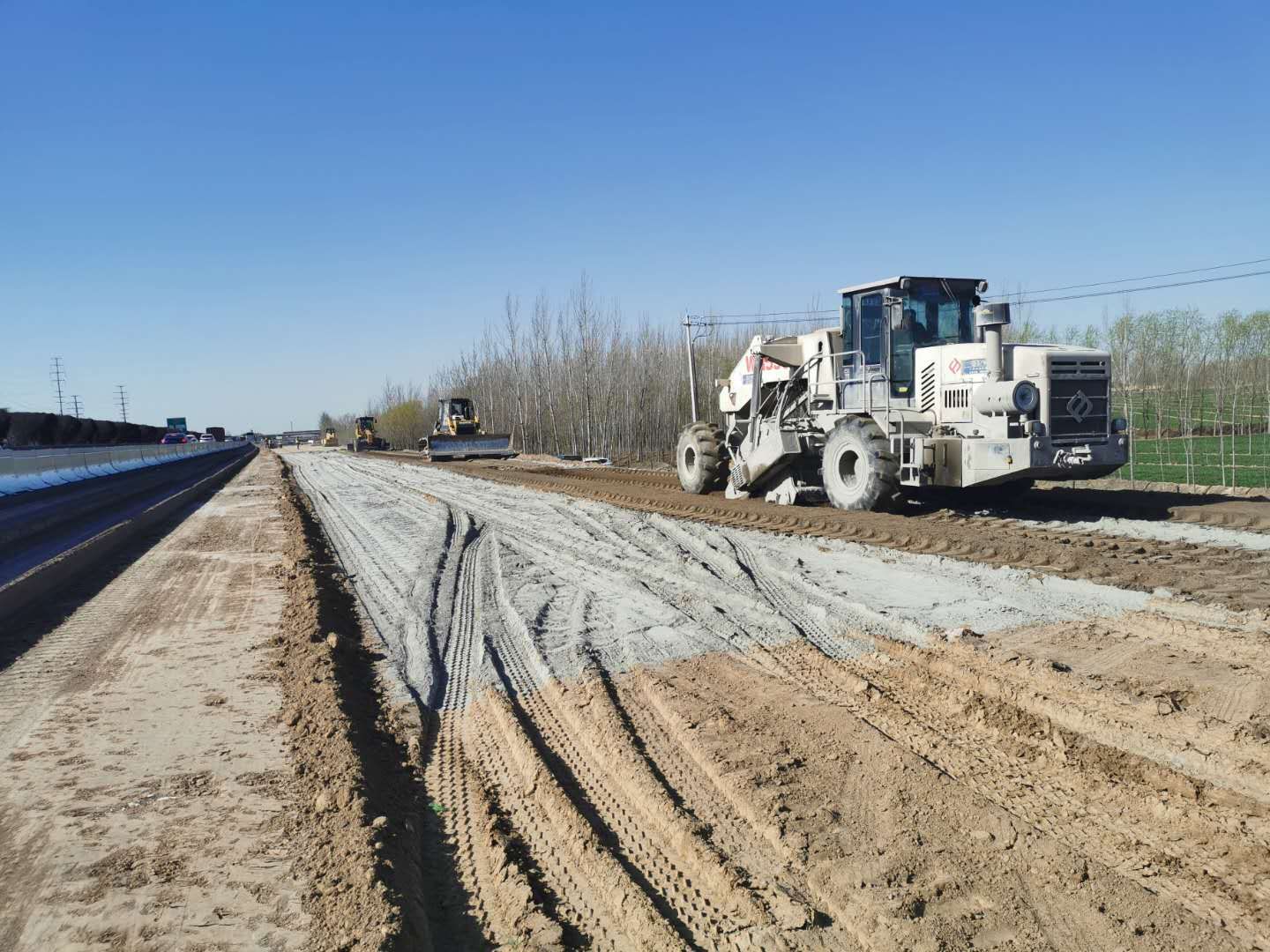
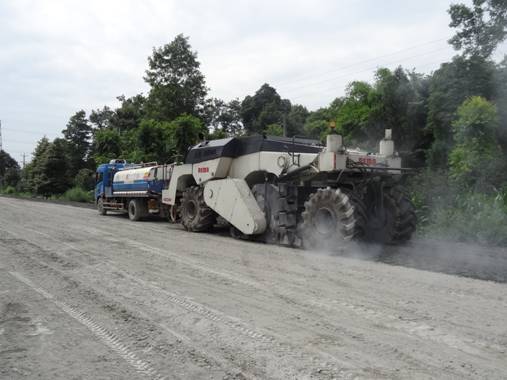
(2)攤鋪水泥。根據(jù)工程設(shè)計(jì)中再生層厚度、密度以及水泥使用量,計(jì)算單位面積內(nèi)水泥需求量,并確定水泥施工間距,按照要求以人工施工或者機(jī)械施工進(jìn)行水泥均勻攤鋪。本工程施工中采用水泥漿車進(jìn)行水泥攤鋪,具體施工工藝流程為:制作水泥漿→水泥漿運(yùn)抵現(xiàn)場(chǎng)采集→軟管連接再生機(jī)→微機(jī)控制噴灑→銑刨施工→級(jí)配與水泥混合→布料絞龍進(jìn)一步混合→振動(dòng)熨平板熨平。
(2) Spread cement. Calculate the cement demand per unit area based on the thickness, density, and cement usage of the regeneration layer in the engineering design, determine the cement construction spacing, and evenly spread the cement according to the requirements through manual or mechanical construction. In the construction of this project, cement slurry trucks are used for cement paving. The specific construction process is as follows: making cement slurry → transporting the cement slurry to the site for collection → connecting the hose to the recycling machine → computer-controlled spraying → milling and planing construction → grading and cement mixing → further mixing with fabric winches → vibrating and ironing plates for leveling.
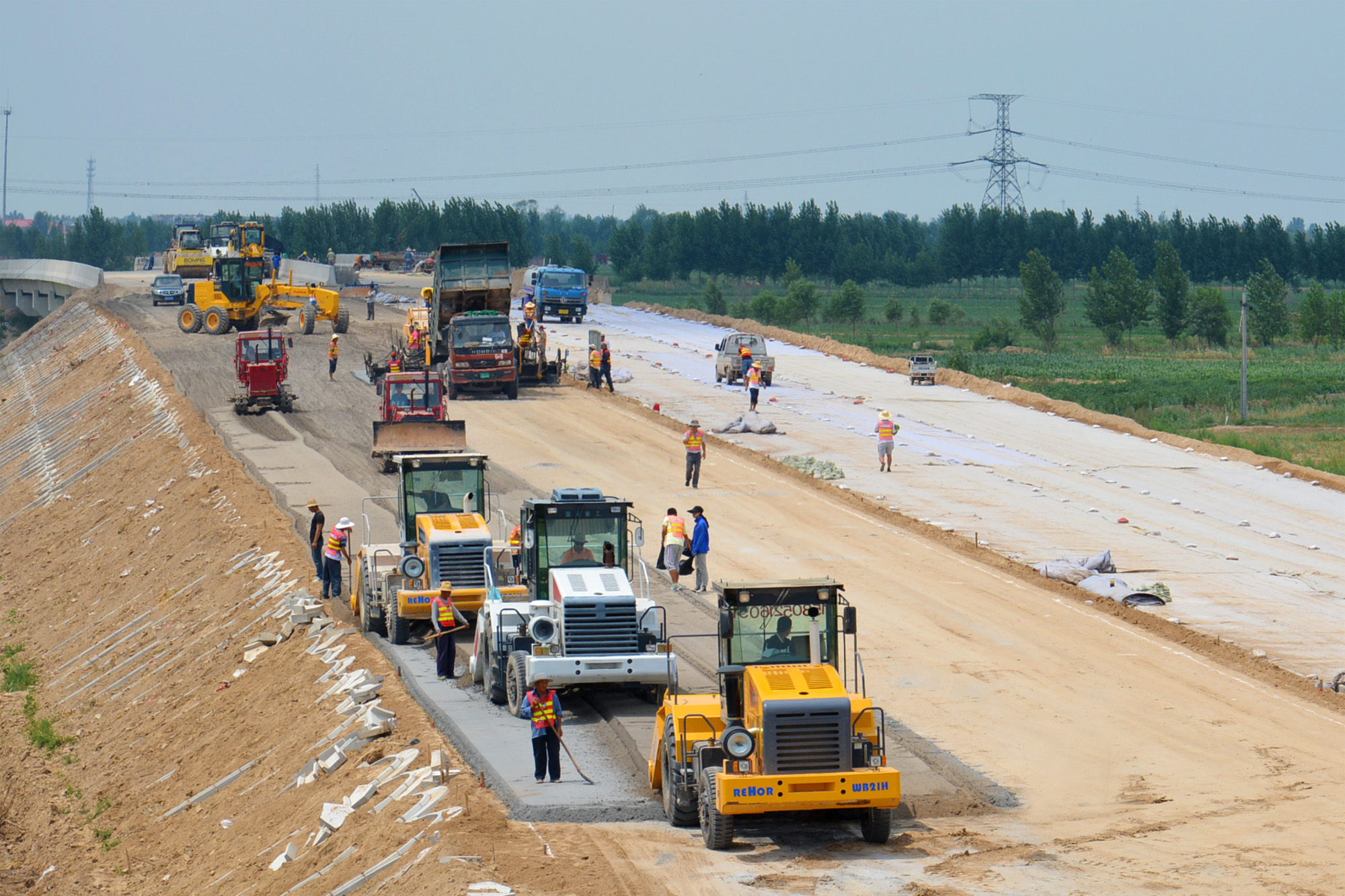
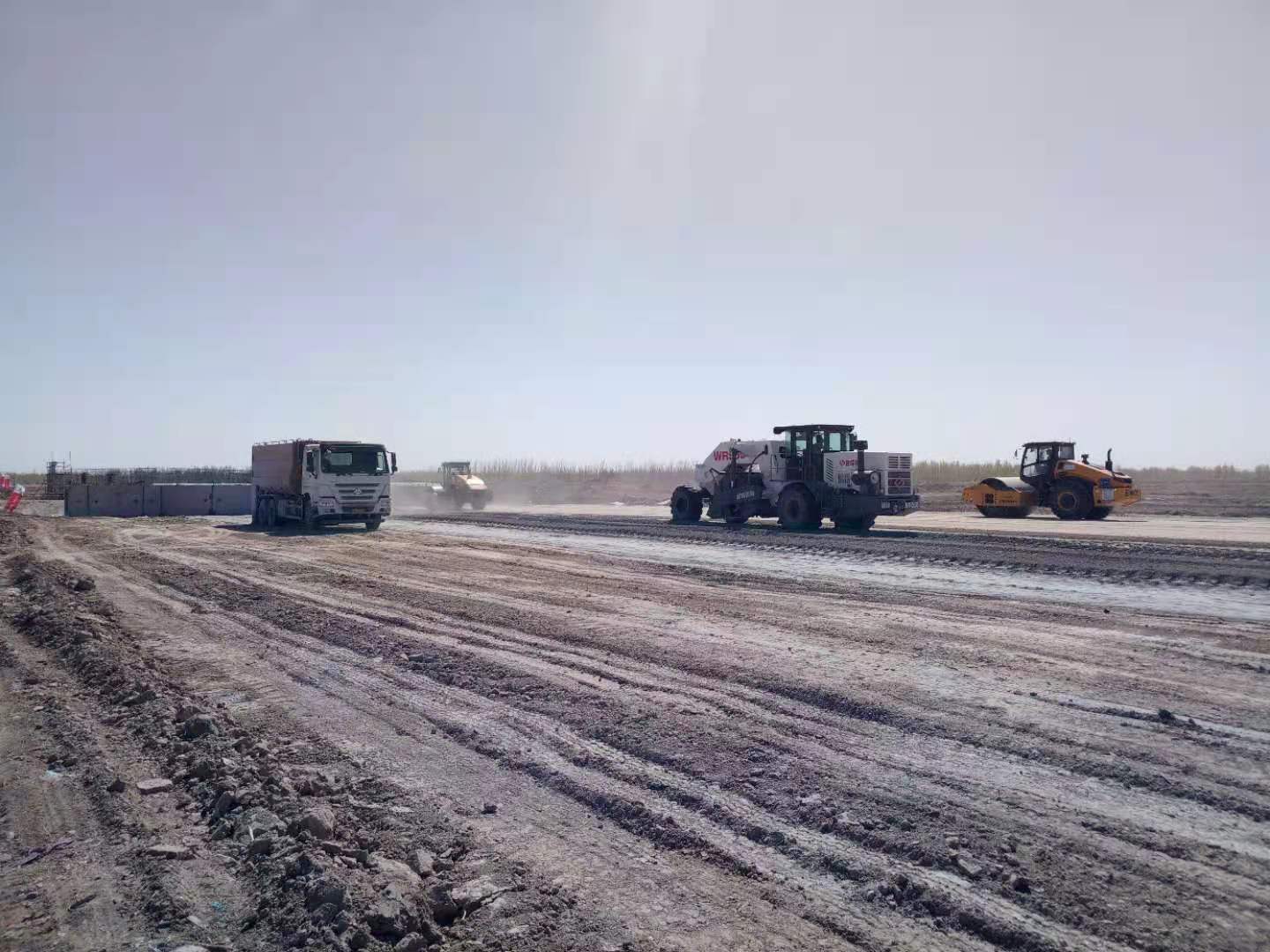
(3)再生層破碎拌和。為方便施工路段正常通行,具體施工過程采用半幅封閉式施工工藝,但考慮到半幅施工后的搭接問題,在前半幅施工時(shí)應(yīng)加寬 20~30cm的施工范圍,以此方便后半幅施工的搭接問題。實(shí)際施工冷拌再生機(jī)再生層破碎拌和過程需要配有 2~3 輛灑水車提供拌和用水,具體拌和過程應(yīng)嚴(yán)格根據(jù)工程設(shè)計(jì)進(jìn)行水量添加[3-4]。考慮到水泥初凝時(shí)間以及工序銜接,單幅每次施工的長度為 100m,冷拌再生機(jī)的行走速度應(yīng)控制在 8m/min,在拌和施工后,質(zhì)檢人員應(yīng)立刻實(shí)施質(zhì)檢工作,確保發(fā)現(xiàn)問題及時(shí)處理。
(3) Crushed and mixed regeneration layer. For the convenience of normal traffic on the construction section, the specific construction process adopts a half width enclosed construction technology. However, considering the overlapping problem after half width construction, the construction range should be widened by 20-30 cm during the first half of the construction to facilitate the overlapping problem of the second half of the construction. The actual construction of the cold mixing and regeneration machine requires 2-3 sprinkler trucks to provide mixing water for the crushing and mixing process of the regeneration layer. The specific mixing process should strictly follow the engineering design for water addition [3-4]. Considering the initial setting time of cement and the connection of processes, the optimal length for each single construction is 100m. The walking speed of the cold mixing and recycling machine should be controlled at 8m/min. After the mixing construction, the quality inspection personnel should immediately carry out quality inspection work to ensure timely handling of problems found.
(4)整平及碾壓。整幅路段拌和施工完成后,使用平地機(jī)進(jìn)行路段整平,若局部區(qū)域存在麻面等質(zhì)量問題,應(yīng)及時(shí)進(jìn)行修補(bǔ)處理。整平完成后,使用 22t振動(dòng)壓路機(jī)進(jìn)行碾壓處理,此過程中應(yīng)保障壓路機(jī)前進(jìn)時(shí)靜壓,返回時(shí)振動(dòng)碾壓,碾壓后再采用 26t振動(dòng)壓路機(jī)進(jìn)行碾壓處理,通常需要碾壓 2~3 遍,之后再使用膠輪壓路機(jī)進(jìn)行終壓處理。碾壓過程應(yīng)嚴(yán)格控制路面平整度。
(4) Leveling and rolling. After the mixing construction of the entire road section is completed, a grader should be used to level the road section. If there are quality problems such as rough surface in some areas, timely repair and treatment should be carried out. After leveling is completed, a 22t vibratory roller is used for rolling treatment. During this process, static pressure should be ensured when the roller moves forward, and vibratory rolling should be carried out when it returns. After rolling, a 26t vibratory roller is used for rolling treatment, usually requiring 2-3 passes of rolling, and then a rubber tired roller is used for final rolling treatment. The compaction process should strictly control the smoothness of the road surface.
(5)養(yǎng)護(hù)。碾壓完成后,應(yīng)及時(shí)在路面覆蓋塑料薄膜養(yǎng)護(hù)。養(yǎng)護(hù)過程應(yīng)嚴(yán)禁車輛通行,并保證再生層表面的濕潤程度,實(shí)際養(yǎng)護(hù)周期應(yīng)控制在 7d以上[5]。養(yǎng)護(hù)完成后,使用空壓機(jī)吹凈表面浮灰,灑涂透層油后,再撒一層石屑,處理完成后道路可恢復(fù)正常使用。
(5) Maintenance. After compaction is completed, plastic film should be promptly covered on the road surface for maintenance. The maintenance process should strictly prohibit the passage of vehicles and ensure the moisture level of the regeneration layer surface. The actual maintenance period should be controlled at 7 days or more [5]. After the maintenance is completed, use an air compressor to blow off the surface dust, sprinkle a layer of oil, and then sprinkle another layer of stone chips. After the treatment is completed, the road can be restored to normal use.
3.2 就地冷再生基層施工質(zhì)量控制
3.2 Quality control of on-site cold recycling base construction
3.2.1 舊路預(yù)處置
3.2.1 Pre disposal of old roads
農(nóng)村公路運(yùn)營多年后存在著各種各樣的病害問題,僅采用冷再生技術(shù)進(jìn)行處理,將可能會(huì)影響施工后道路整體質(zhì)量及使用壽命。對(duì)此,應(yīng)根據(jù)舊路的不同病害進(jìn)行提前預(yù)處理[6]。針對(duì)坑槽病害,可將坑槽區(qū)域挖出,回填水穩(wěn)碎石到舊路標(biāo)高,然后再實(shí)施冷再生處理;針對(duì)沉陷病害,可先實(shí)施冷再生處理,再刮除部分再生料后,回填水穩(wěn)碎石;針對(duì)涌包病害,應(yīng)增加冷再生過程中拌和深度及水泥量,若是涌包較大,應(yīng)提前刨除涌包后再實(shí)施冷再生施工。
After many years of operation, rural roads have various disease problems, and using only cold recycling technology for treatment may affect the overall quality and service life of the roads after construction. In this regard, pre-treatment should be carried out in advance according to the different diseases of the old road [6]. For pit and groove diseases, the pit and groove area can be excavated, backfilled with water stabilized crushed stones to the elevation of the old road, and then subjected to cold recycling treatment; For subsidence diseases, cold regeneration treatment can be implemented first, and then some regenerated materials can be scraped off before backfilling with water stabilized crushed stones; To address the issue of bulging, the mixing depth and cement content during the cold recycling process should be increased. If the bulging is significant, it should be removed in advance before implementing cold recycling construction.
3.2.2 再生深度
3.2.2 Regeneration depth
再生深度直接影響再生層厚度,若是再生深度較淺,則會(huì)導(dǎo)致再生層厚度小于設(shè)計(jì)要求;反之則增加施工成本。具體施工前應(yīng)通過隨機(jī)鉆樣檢查來確定冷再生銑刨深度,根據(jù)國內(nèi)冷再生施工經(jīng)驗(yàn)[7-9],確認(rèn)水泥再生層 7d時(shí)冷再生基層強(qiáng)度應(yīng)控制在 1.8MPa以上,底基層應(yīng)控制在 1.5MPa以上,基層與底基層厚度應(yīng)控制在 18~20cm和 15~20cm。
The depth of regeneration directly affects the thickness of the regeneration layer. If the depth of regeneration is shallow, it will result in the thickness of the regeneration layer being less than the design requirements; Otherwise, it will increase the construction cost. Before specific construction, the depth of cold recycling milling should be determined through random drilling inspection. According to domestic cold recycling construction experience [7-9], it is confirmed that the strength of the cold recycling base layer should be controlled above 1.8 MPa when the cement recycling layer is 7 days old, and the bottom layer should be controlled above 1.5 MPa. The thickness of the base layer and bottom layer should be controlled between 18-20 cm and 15-20 cm.
3.2.3 級(jí)配
3.2.3 Grading
具體施工應(yīng)根據(jù)工程設(shè)計(jì)的不同路段劃分,針對(duì)性開展冷再生料檢測(cè)及級(jí)配調(diào)整,確保調(diào)整后的級(jí)配可滿足施工設(shè)計(jì)要求。若是在施工中出現(xiàn)實(shí)際級(jí)配與設(shè)計(jì)級(jí)配偏差情況,應(yīng)深入分析問題成因,并及時(shí)調(diào)整冷拌再生機(jī)的轉(zhuǎn)子速度及行走速度。
The specific construction should be carried out according to the different road sections of the engineering design, and targeted cold recycled material testing and grading adjustment should be carried out to ensure that the adjusted grading can meet the requirements of the construction design. If there is a deviation between the actual grading and the design grading during construction, the cause of the problem should be analyzed in depth, and the rotor speed and walking speed of the cold mix recycling machine should be adjusted in a timely manner.
3.2.4 路面標(biāo)高
3.2.4 Road surface elevation
采用瀝青路面就地冷再生技術(shù)對(duì)農(nóng)村公路處理后,通常會(huì)出現(xiàn)路面標(biāo)高高于舊路情況,進(jìn)而導(dǎo)致舊路原有建構(gòu)物與舊路接頭區(qū)域不匹配的情況。對(duì)此,可在施工中通過架設(shè)高臺(tái)帽、重做橋面、更換支座等方式保障路面與橋面的接順效果;建構(gòu)物則可通過提高道牙、分隔帶等方式提高道路縱橫向舒適性;處理后道路的起點(diǎn)和終點(diǎn)可設(shè)置漸變段保證與舊路的接順效果。
After using the in-situ cold recycling technology of asphalt pavement to treat rural roads, it is common for the pavement elevation to be higher than the old road, resulting in a mismatch between the original structures of the old road and the joint area of the old road. In this regard, the smooth connection between the road surface and the bridge deck can be ensured during construction by installing high platform caps, redoing the bridge deck, and replacing supports; Constructions can improve the longitudinal and transverse comfort of roads by raising curbs, dividers, and other means; The starting and ending points of the processed road can be set with gradient segments to ensure smooth connection with the old road.
4 效果分析傳統(tǒng)方法多采用挖除舊路、路基整平、重做穩(wěn)定土底層等方式進(jìn)行舊路處理,相較于傳統(tǒng)工藝,瀝青路面就地冷再生技術(shù)在舊路面刨除及外運(yùn)、基層原材料攤鋪、原材料運(yùn)輸、縮短施工周期等方面均具有更大優(yōu)勢(shì)。根據(jù)理論計(jì)算確認(rèn),傳統(tǒng)施工方案工程造價(jià)約為 35 元 /m2,而瀝青路面就地冷再生技術(shù)施工造價(jià)約為 28 元 /m2,此公路整個(gè)工程線路長 22.45km,路面寬度為 9m,預(yù)計(jì)可節(jié)約工程費(fèi)用約 100 多萬元,由此可以確定,瀝青路面就地冷再生技術(shù)具有更強(qiáng)的應(yīng)用價(jià)值,建議在舊路改造工程中優(yōu)先采用該技術(shù)。5 結(jié)語綜上所述,本文以某農(nóng)村公路為研究案例,對(duì)瀝青路面就地冷再生技術(shù)的有效應(yīng)用進(jìn)行了綜合分析。瀝青路面就地冷再生技術(shù)具有操作簡單、無需原材料運(yùn)輸和基層材料外運(yùn)、縮短施工工期等優(yōu)勢(shì),相較于傳統(tǒng)施工工藝,可有效降低工程成本,效益明顯,建議在后續(xù)施工中進(jìn)行推廣應(yīng)用。
Traditional methods often use methods such as excavating old roads, leveling roadbeds, and redoing stable soil layers to treat old roads. Compared with traditional processes, on-site cold recycling technology for asphalt pavement has greater advantages in the removal and transportation of old road surfaces, paving of base raw materials, transportation of raw materials, and shortening of construction cycles. According to theoretical calculations, the construction cost of traditional construction methods is about 35 yuan/m2, while the construction cost of on-site cold recycling technology for asphalt pavement is about 28 yuan/m2. The entire project route of this highway is 22.45km long and the pavement width is 9m, which is expected to save more than 1 million yuan in engineering costs. Therefore, it can be determined that on-site cold recycling technology for asphalt pavement has stronger application value, and it is recommended to prioritize the use of this technology in old road reconstruction projects. In summary, this article takes a rural road as a research case and conducts a comprehensive analysis of the effective application of in-situ cold recycling technology for asphalt pavement. The on-site cold recycling technology for asphalt pavement has the advantages of simple operation, no need for raw material transportation and external transportation of base materials, and shortened construction period. Compared with traditional construction processes, it can effectively reduce project costs and has significant benefits. It is recommended to promote and apply it in subsequent construction.
本文由 冷再生機(jī)租賃 友情奉獻(xiàn).更多有關(guān)的知識(shí)請(qǐng)點(diǎn)擊 http://www.toppersin.com/ 真誠的態(tài)度.為您提供為的服務(wù).更多有關(guān)的知識(shí)我們將會(huì)陸續(xù)向大家奉獻(xiàn).敬請(qǐng)期待.
This article is a friendly contribution from Cold Recycling Machine Rental For more related knowledge, please click http://www.toppersin.com/ Sincere attitude To provide you with comprehensive services We will gradually contribute more relevant knowledge to everyone Coming soon.
閱讀/ Recommended reading
- 冷再生機(jī)租賃:“冷再生”技術(shù)助推綠色發(fā)展 2025-12-11
- 冷再生機(jī)租賃:公路基層全深式就地冷再生施工技術(shù)研究 2025-12-10
- 冷再生機(jī)租賃:冷在生技術(shù)助力道路經(jīng)濟(jì)快速恢復(fù)交通 2025-12-09
- 冷再生機(jī)租賃:乳化瀝青與泡沫瀝青冷再生技術(shù)發(fā)展 2025-12-06
引言隨著我國社會(huì)經(jīng)濟(jì)的持續(xù)發(fā)展,社會(huì)對(duì)于公路交通系統(tǒng)的需求也在持續(xù)增長,其一方面推動(dòng)了公路交通網(wǎng)絡(luò)建設(shè)的持續(xù)推進(jìn),另一方面也使得公路質(zhì)量及要求不斷提升。瀝青路面作為我國公路常...